Scroll sideways for more
| Tailwater | Special rule (Chapter W-1) | Bait? | Flow and date | Winter rig note | Source |
|---|---|---|---|---|---|
| Deckers (South Platte, lower Wigwam Club boundary to Scraggy View Picnic Ground) | Artificial flies and lures only. Trout bag and possession limit is 2 fish, 16 inches minimum | No. Flies and lures only | 107 cfs (gauge reading, Nov. 29, 2026) | Angler's Covey (Nov. 25): trout in channel troughs, deep bank shelves and seams behind rocks; midges late morning to early afternoon. The Blue Quill Angler (Nov. 18): Black Beauty #20-22, RS2 #20-24 | CPW Chapter W-1; Seamline flow data; shop reports as dated |
| Cheesman Canyon (South Platte, Cheesman Dam to the upper Wigwam Club property line) | Artificial flies and lures only. All trout must be returned to the water immediately | No. Flies and lures only | 103 cfs (gauge reading, Nov. 29, 2026) | Angler's Covey (Nov. 25): crystal clear; fish in deep plunge pools, slow tailouts and channel troughs, feeding from about 11 to 2:30. Brown trout redds on shallow gravel: stay off them | CPW Chapter W-1; Seamline flow data; shop reports as dated |
| Dream Stream (South Platte, Spinney Mountain Reservoir outlet to Eleven Mile Reservoir inlet) | Artificial flies and lures only. All fish must be returned to the water immediately. Some portions may be closed as posted from Sept. 15 to Dec. 31 for kokanee spawning operations | No. Flies and lures only | 112 cfs (gauge reading, Nov. 29, 2026) | Royal Gorge Anglers (Nov. 25): water about 38 degrees; midge larvae and red eggs. The Blue Quill Angler (Nov. 18): resident trout in the deeper bends, undercut banks and soft seams | CPW Chapter W-1; Seamline flow data; shop reports as dated |
| Elevenmile Canyon (South Platte, below Eleven Mile Dam to the Wagon Tongue Gulch Road bridge at Springer Gulch) | Artificial flies and lures only. All trout must be returned to the water immediately | No. Flies and lures only on this stretch | 103 cfs (gauge reading, Nov. 29, 2026) | Angler's Covey (Nov. 25): water in the upper 30s; fish in channel troughs, deep boulder pockets and ledge seams; best from about 11 to 2:30 | CPW Chapter W-1; Seamline flow data; shop reports as dated |
| Blue River in Silverthorne (Dillon Dam to the north city limits of Silverthorne) | Artificial flies and lures only. All trout must be returned to the water immediately | No. Flies and lures only | 63 cfs (gauge reading, Nov. 29, 2026) | Breckenridge Outfitters (Nov. 23): nymphing below Dillon Dam is fishing well, best from 8 a.m. to 1 p.m.; Zebra Midge #20-24, RS2 #20-24, Mysis #18-20 | CPW Chapter W-1; Seamline flow data; shop reports as dated |
| Williams Fork River (Williams Fork Dam to the Colorado River) | Artificial flies and lures only. All trout must be returned to the water immediately | No. Flies and lures only | 21 cfs (gauge reading, Nov. 29, 2026) | Very low. On Nov. 18 Cutthroat Anglers said to look elsewhere and The Blue Quill Angler advised staying off while releases are this low. Cutthroat Anglers reported browns spawning: stay off the redds | CPW Chapter W-1; Seamline flow data; shop reports as dated |
| Big Thompson River (base of Olympus Dam at Lake Estes to the bridge at Waltonia) | Artificial flies and lures only. All trout must be returned to the water immediately | No. Flies and lures only | 19 cfs (gauge reading, Nov. 29, 2026) | Front Range Anglers (Nov. 25): low 40s, light stain; canyon stretches with direct morning sun hold the most active fish; Juju Baetis, RS2, Zebra Midge | CPW Chapter W-1; Seamline flow data; shop reports as dated |
| Waterton Canyon (South Platte, Strontia Springs Dam to 300 yards above Denver Water's Marston Diversion) | Artificial flies and lures only. Trout bag and possession limit is 2 fish | No. Flies and lures only | 24 cfs (gauge reading, Nov. 29, 2026) | No dated shop report in Seamline's data: current winter pattern UNKNOWN. Use the base rig below | CPW Chapter W-1; Seamline flow data |
The short answer
A winter midge rig is a two-fly nymph rig: a 9-foot 5X leader, 12 to 18 inches of 6X tippet, two flies in sizes 18 to 24 tied 12 to 14 inches apart, one small split shot on the tippet knot 12 to 18 inches above the upper fly, and a yarn indicator set 1.5 to 2 times the water's depth above the shot. Colorado allows no more than 3 common hooks on a line, so two flies are legal. Fish it dead drift through slow, deep water. Pat Dorsey, a South Platte guide writing in Fly Fisherman, puts the best winter fishing between 11 a.m. and 3 p.m. Sources differ on shot placement, fly order and indicator depth: both views are in the steps below.
What you need
- One 9-foot tapered leader ending in 5X. Dorsey uses 9-foot or 12-foot leaders in winter so he can nymph deeper water. MeatEater's winter midge article gives about 9 feet in 5X to 7X.
- A spool of 6X tippet. Dorsey adds 6X monofilament to a 5X leader for low, slow water. MeatEater's winter midge article suggests 6X to 8X fluorocarbon.
- Two flies, sizes 18 to 24 (see the fly section below and the winter fly box page).
- Small split shot. Dorsey says one small shot is usually enough for midge pupae. Fly Fisherman's midge guide prefers a few small pieces spread along the leader over one big shot. Seamline's winter fly box page lists sizes 4 to 6.
- A small yarn indicator. Dorsey calls yarn the most sensitive to subtle strikes.
- Nippers and something to pinch shot. Tiny flies and 6X are hard to handle with cold hands.
Rig it step by step
- Step 1. Start with a 9-foot tapered leader that ends in 5X.
- Step 2. Tie 12 to 18 inches of 6X tippet to the end of the 5X leader. The knots guide shows how. This knot is where the split shot will sit.
- Step 3. Tie the larger of your two flies to the end of that 6X. A size 18 to 20 midge larva is a good start. This is the upper fly, 12 to 18 inches below the tippet knot. Sources differ on order: Dorsey puts the larger fly first, while Fly Fisherman's midge guide puts the pupa on top because the natural rides higher in the water.
- Step 4. Tie 12 to 14 inches of 6X tippet to the upper fly. Dorsey ties nymph droppers eye to eye and says he lands more fish that way. The Orvis rigging guide ties the second tippet to the hook bend. Both work.
- Step 5. Tie the smaller fly, a size 20 to 24 midge pupa or Baetis nymph, to the end of that 12 to 14 inches. The two flies now ride 12 to 14 inches apart. MeatEater says about a foot apart.
- Step 6. Pinch 1 small split shot onto the leader just above the tippet knot from Step 2, 12 to 18 inches above the upper fly. The knot keeps the shot from sliding down. Sources differ here: MeatEater puts 1 BB shot 6 to 8 inches above the top fly; the Orvis rigging guide splits 2 BB shot, 1 at the leader-to-tippet knot and 1 about 6 inches above the first fly; Fly Fisherman's midge guide always keeps the top fly above the weight and spreads a few small pieces along the leader. Start at 12 to 18 inches in clear, slow water.
- Step 7. Put the yarn indicator on the leader 1.5 to 2 times the water's depth above the split shot, as Dorsey describes. In 2 feet of water that is 3 to 4 feet above the shot. In 3 feet of water it is 4.5 to 6 feet. Fly Fisherman's midge guide measures about 1.5 times the depth from the indicator to the last fly, and MeatEater gives about 1.5 times the depth.
- Step 8. Check the rig against the rules. You have 2 hooks on 1 line. Colorado's limit is 3 common hooks on a line.
Measured from the top, the finished rig is: indicator, then 3 to 6 feet of leader, then 1 small shot at the tippet knot, then 12 to 18 inches of 6X to the upper fly, then 12 to 14 inches of 6X to the lower fly.
How many flies are legal in Colorado?
Colorado's fishing regulations (2 CCR 406-1, rule #103.A.1) allow one personally attended line, and #103.A.1.a says each line may have no more than 3 common hooks attached. A common hook is any hook, or multiple hooks, on one shank (#100.L). A two-fly midge rig uses 2 of the 3. A third fly is the legal maximum.
All eight tailwaters in the table are artificial flies and lures only. The regulations define artificial flies and lures as devices made of non-edible, non-scented materials. Scent added later counts as scent. Worms, dough baits, scented manufactured eggs and real fish eggs are bait, and bait is not legal on any water in the table.
Which flies and sizes for winter
Midges are most of the menu. Fly Fisherman's midge guide says trout feed on midges almost exclusively in late fall, winter and early spring. Dorsey recommends carrying midge larvae in pale olive, cream and red in sizes 18 to 20, and midge pupae in sizes 20 to 24. On the tailwaters he fishes, his usual plan in low water is two flies in sizes 20 to 24: a midge larva or pupa trailed by a Baetis nymph.
- Upper fly (the larger one): a midge larva in size 18 to 20, red, cream or pale olive. Or a micro egg in size 18 to 20, which Dorsey recommends as a winter attractor.
- Lower fly (the smaller one): a midge pupa in size 20 to 24, such as a Zebra Midge or Black Beauty, or an RS2 or Juju Baetis in size 20 to 24. Those are the patterns the shop reports in the table named this month.
- Blue River in Silverthorne: add a Mysis shrimp. Breckenridge Outfitters listed Mysis #18-20 on Nov. 23.
- Order: Dorsey puts the larger fly first and the smaller fly behind it. Fly Fisherman's midge guide puts the pupa on top instead. Try both.
The winter fly box page has the full list of 12 patterns with sizes, plus tippet and shot.
Where trout hold in winter
Skip the fast water. Dorsey writes that from November to March trout winter in slower runs and deep pools, and that fast riffles and rapids hold fewer fish. Colorado Outdoors, Colorado Parks and Wildlife's magazine, says the same: trout leave fast riffles for calmer, deeper pools to save energy, and hold in the bottom third of the water. The Orvis winter guide says fish pod up in deeper, slower water.
The shop reports in the table match. On Nov. 25 Angler's Covey put Cheesman Canyon fish in deep plunge pools, slow tailouts and channel troughs, Deckers fish in channel troughs, deep bank shelves and seams behind rocks, and Elevenmile Canyon fish in channel troughs, deep boulder pockets and ledge seams.
Stay off spawning gravel. Shop reports from Nov. 18 to Nov. 25 noted brown trout redds at Cheesman Canyon, Deckers and the Williams Fork. Do not wade on them or fish to trout sitting on them.
How to fish it
- Cast upstream at about a 45-degree angle. Dorsey roll-casts up and across, then right away lifts the fly line and the butt of the leader off the water.
- Let it drift at the speed of the current with no drag. The Orvis winter guide says a dead drift is critical because trout will not chase a fly in cold water. Colorado Outdoors says only a natural, drag-free drift will get a sluggish winter trout to eat.
- Get it down. Colorado Outdoors says to use plenty of split shot to get nymphs near the bottom. Fly Fisherman's midge guide says to use as little weight as the water type allows. Dorsey warns that too much weight drifts the flies below the fish. Add 1 shot at a time.
- Adjust depth in small steps. A guide quoted by MidCurrent moves his indicator closer to his flies 6 inches at a time until he finds the right depth.
- Set the hook often. Dorsey says up to a third of strikes go undetected by the indicator, and he advises making a habit of setting the hook whether or not a strike shows.
- Put the fly on the fish. Dorsey says it takes a precise dead drift, and often the fly has to bump the trout in the nose to get it to eat.
Time of day
Dorsey puts the best winter fishing between 11 a.m. and 3 p.m., and notes that a rise of 3 to 5 degrees in water temperature can change the day. Angler's Covey reported a similar window on Nov. 25: Cheesman Canyon fish fed from about 11 to 2:30, Elevenmile Canyon was best from about 11 to 2:30, and Deckers saw midges from late morning to early afternoon.
Two reports differ. Breckenridge Outfitters said the Blue below Dillon Dam was best from 8 a.m. to 1 p.m. (Nov. 23). Front Range Anglers said the Big Thompson's canyon stretches with direct morning sun held the most active fish (Nov. 25). For rising fish, the Orvis winter guide says surface activity peaks mid-afternoon on sunny days, and can last all day on gray, snowy days without wind.
Flows on November 29, 2026 (past gauge readings)
Flows in the table are past gauge readings in Seamline's data, dated Nov. 29, 2026. They are not forecasts: check the gauge again before you drive. On that date the four South Platte waters above Denver read 103 to 112 cfs: Deckers 107, Cheesman Canyon 103, Dream Stream 112, Elevenmile Canyon 103. The Blue in Silverthorne read 63 cfs. Waterton Canyon read 24 cfs.
Two waters read very low. The Williams Fork read 21 cfs on Nov. 29; on Nov. 18 Cutthroat Anglers said to look elsewhere and The Blue Quill Angler advised staying off while releases were that low. The Big Thompson below Olympus Dam read 19 cfs on Nov. 29. Low, clear water means less weight and a shorter indicator setting: keep the 1.5 to 2 times depth rule and measure the water in front of you. The streamflow guide explains how to read a gauge before you drive.
Where this comes from
Read on November 29, 2026.
- Colorado fishing regulations, Chapter W-1 (2 CCR 406-1). Special regulation entries for the South Platte River (#399.b to #399.f), Blue River (#47.b), Williams Fork River (#469) and Big Thompson River (#42.a): CPW's Chapter W-1 Article II as approved November 13, 2025, effective April 1, 2026. Hook and line rule #103.A.1 and definitions #100.A, #100.B and #100.L: read in CPW's Chapter W-1 as approved November 4, 2026 (effective April 1, 2027) and in the Secretary of State's copy of 2 CCR 406-1 effective April 1, 2026 (its editor's notes list amendments effective 04/01/2026; read in a browser November 29, 2026); CPW's summary of the rules that took effect April 1, 2026 lists no change to the hook rules.
- Fly Fisherman: Pat Dorsey, "3 Fly Fishing Guide Rigs" (September 15, 2025) and "Secret Season" (posted January 6, 2025; first printed 2012); Ross Purnell's midge guide for tailwater trout (February 11, 2025).
- Orvis: winter fishing tips by Tom Rosenbauer; "Nymph With Indicator, Split Shot & Multiple Flies" (no author or date shown).
- Orvis learning center: winter fishing tips by Tom Rosenbauer; how to nymph with an indicator, split shot and multiple flies.
- MeatEater: "How to Fish a Winter Midge Hatch" by Kubie Brown (March 4, 2022). MidCurrent: "Winter Nymph Rigs" by Dave Karczynski (January 11, 2016).
- Flows and shop reports: Seamline's own data file, gauge readings dated Nov. 29, 2026, and reports from Angler's Covey (Nov. 25), Royal Gorge Anglers (Nov. 25), Front Range Anglers (Nov. 25), Breckenridge Outfitters (Nov. 23), The Blue Quill Angler (Nov. 18) and Cutthroat Anglers (Nov. 18).
Not confirmed today: a published split shot size for this rig beyond "small"; a current shop report for Waterton Canyon; which parts of the Dream Stream are posted closed. Rules change at fences and bridges, so read the signs on the water.
Questions anglers ask
- How do you set up a midge rig?
- Start with a 9-foot 5X leader. Add 12 to 18 inches of 6X tippet and tie on a size 18 to 20 midge larva. Tie 12 to 14 inches of 6X to that fly and add a size 20 to 24 midge pupa. Pinch 1 small split shot above the tippet knot, 12 to 18 inches above the upper fly. Set a yarn indicator 1.5 to 2 times the water's depth above the shot.
- How many flies can you fish at once in Colorado?
- Up to 3. Colorado's fishing regulations (2 CCR 406-1, #103.A.1.a) say each line may have no more than 3 common hooks attached. A two-fly midge rig is legal.
- How far apart should two nymphs be?
- 12 to 14 inches. That is the spacing Pat Dorsey gives in Fly Fisherman. MeatEater's winter midge article says about a foot.
- Where does the split shot go on a nymph rig?
- On the tippet knot 12 to 18 inches above the upper fly, by Dorsey's method. The knot stops the shot from sliding. MeatEater puts a BB shot 6 to 8 inches above the top fly. The Orvis rigging guide uses 2 BB shot, 1 at the leader-to-tippet knot and 1 about 6 inches above the first fly. Fly Fisherman's midge guide keeps the top fly above the weight.
- How deep should the indicator be?
- Dorsey sets it 1.5 to 2 times the depth of the water above the split shot. In 3 feet of water that is 4.5 to 6 feet. Fly Fisherman's midge guide gives about 1.5 times the depth, measured from indicator to the last fly, and MeatEater also gives about 1.5 times the depth.
- What size tippet for winter midges?
- 6X on most days, on a 5X leader. MeatEater's winter midge article gives a range of 6X to 8X fluorocarbon for tiny flies in clear water.
- What time of day is best for winter tailwater fishing?
- Dorsey puts the best winter fishing between 11 a.m. and 3 p.m. Angler's Covey reported Cheesman Canyon and Elevenmile Canyon fish feeding from about 11 to 2:30 on Nov. 25, 2026.
- Can you use bait on Deckers, Cheesman Canyon or the Dream Stream?
- No. Chapter W-1 makes all three artificial flies and lures only. Cheesman Canyon and the Dream Stream are also catch and release. Deckers allows 2 trout of 16 inches or longer.
Find today's best water near Denver
Read next
Fly Fishing Cheesman Canyon
How to fly fish Cheesman Canyon on the South Platte: the hike in, best flows, flies by season, rigs for wary trout, regulations and when to go.
7 min readPhoto: denverkid, CC BY 2.0
Fly Fishing the South Platte at Deckers
Fly fishing the South Platte at Deckers: roadside access, best flows, seasonal flies, how to beat the crowds and why some days fish poorly.
7 min read
Fly Fishing the Dream Stream
Fly fishing the Dream Stream below Spinney Mountain Reservoir: lake-run browns and rainbows, the best seasons, flows, flies, wind and etiquette.
7 min read
Fly Fishing Elevenmile Canyon
Fly fish Elevenmile Canyon on the South Platte below Elevenmile Dam: canyon road access, the trophy water near the dam, flows, flies and tips.
5 min readPhoto: Jeffrey Beall, CC BY 4.0
Fly Fishing the Blue River in Silverthorne
Fly fishing the Blue River tailwater below Dillon Dam in Silverthorne: mysis shrimp, big trout, flows, access through town and winter tips.
5 min readPhoto: devriesm, CC BY-SA 2.0
Fly Fishing the Big Thompson River
Fly fishing the Big Thompson below Olympus Dam near Estes Park: pocket water, lots of fish, the right flow gauge, flies and low-water tactics.
5 min readPhoto: Wusel007, CC BY-SA 3.0
Fishing Waterton Canyon
Fishing Waterton Canyon on the South Platte near Littleton: walk or bike access, tailwater trout, best sections, the no-dogs rule and winter tips.
6 min readPhoto: denverkid, CC BY 2.0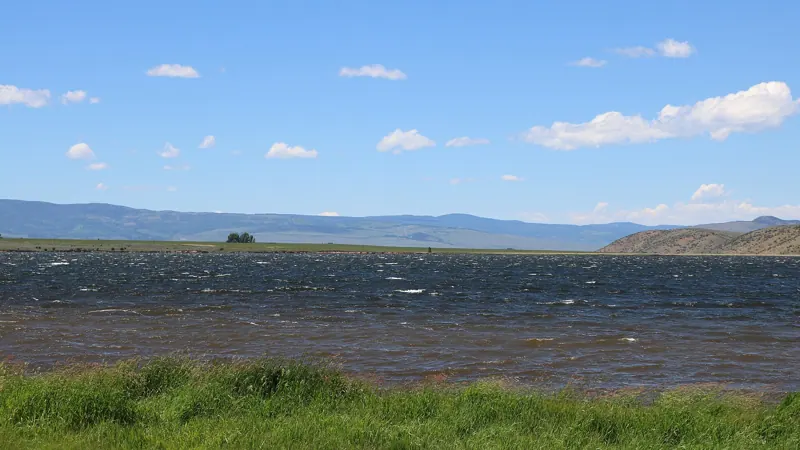
Fishing the Williams Fork
Fishing the Williams Fork near Parshall: the catch-and-release tailwater below the dam and Williams Fork Reservoir for pike, kokanee and lake trout. 2026 status, rules, flows and where to park.
9 min readPhoto: Jeffrey Beall, CC BY 4.0
Winter Fly Fishing Near Denver
A practical guide to winter fly fishing near Denver: which tailwaters stay open, the best time of day, midge rigs, safety and staying warm.
3 min read
The Best Tailwaters Near Denver
The best tailwater fly fishing near Denver, from Waterton Canyon to the Fryingpan, with drive times, what each is best for and whether dogs are allowed.
2 min read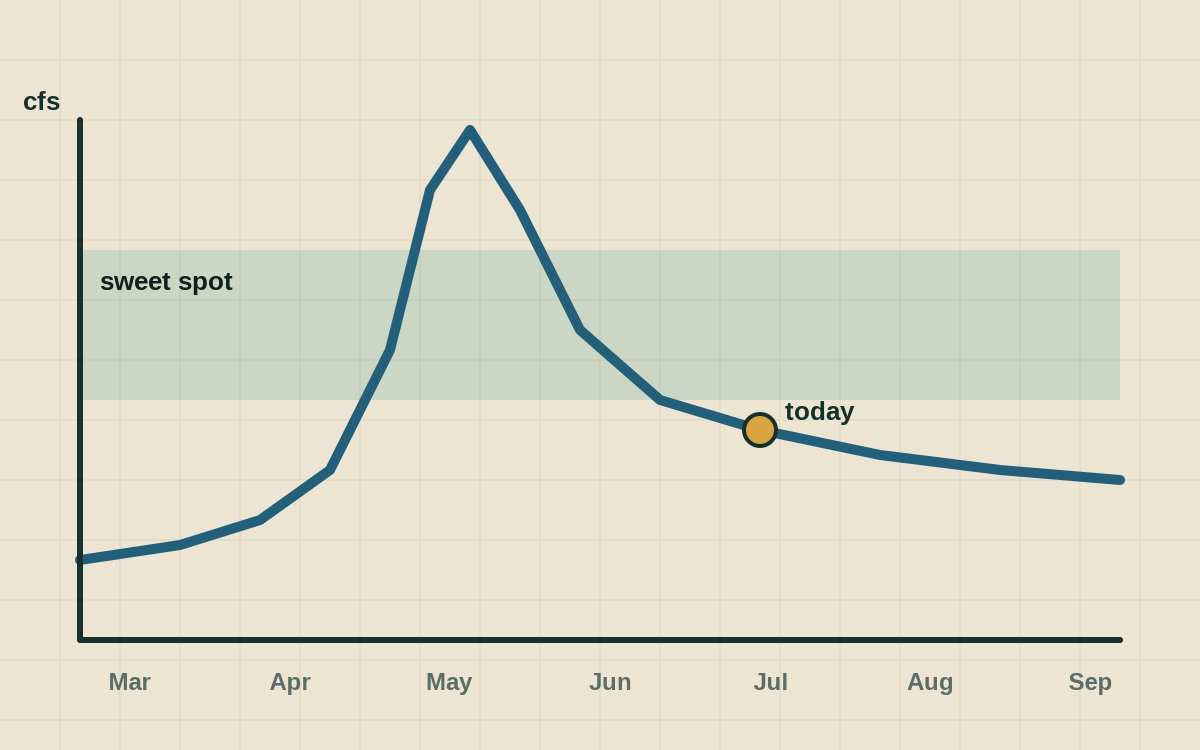
How to Read Streamflow for Fly Fishing
How to read river flows for fishing: cfs vs gauge height, picking the right gauge, USGS vs Colorado DWR stations, normal flows and what a sudden change means.
2 min read
The Winter Tailwater Fly Box
A compact winter fly box for Colorado tailwaters: midges, Baetis, attractors and mysis, plus tippet and accessories.
1 min read
Fishing Knots: Which One, and How to Tie It
How to tie the six fishing knots that cover almost everything: arbor, improved clinch, Palomar, double surgeon's, double uni and non-slip loop, with a drawing for every step.
6 min read