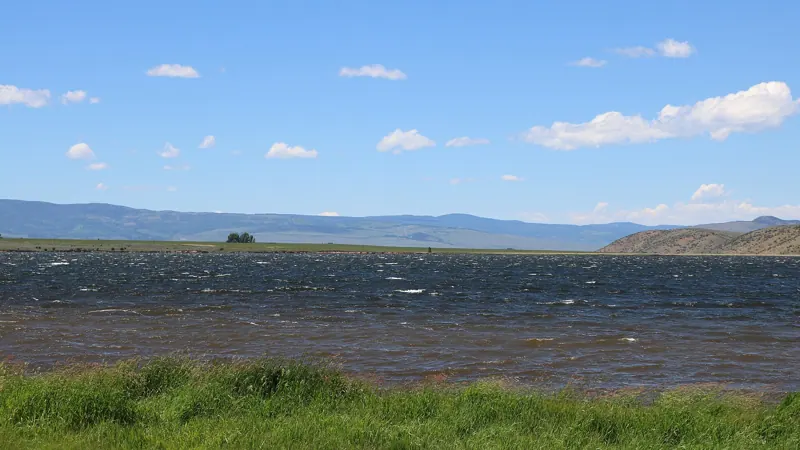
Right now
Live from USGS gauge 09038500 and National Weather Service.
How to fish it
Checked Nov 20
- Best time
- Reservoir: the first and last hour of light; it's open from a half hour before sunrise to a half hour after sunset. River: skip it while releases sit near the winter minimum.
- Wading
- River: wading is legal, but at winter minimum flows the shops say fish elsewhere, and the browns are on their redds. Reservoir: no wading rule found.
- Fly rod
- River, only once it is back above about 40 cfs: Juju Baetis or RS2 #20–24 on 6x, short drifts in the deeper slots. Stay off the gravel
- Fly rig
- Reservoir: spinning rod, 3/8 oz spoons and tube jigs. River: light nymph rig, 6x, just enough weight to tick bottom.
- Spinner
- Reservoir: a 3/8 oz spoon or a tube jig, counted down and worked slowly along the steeper banks, in under 10 ft of water at first and last light.
- Bait
- Reservoir only. No bait on the river below the dam. Bait is legal on the reservoir only, and not live fish: 2 CCR 406-1 bans live fish for bait in all waters west of the Continental Divide (except Navajo Reservoir). The river from the dam to the Colorado River is flies and lures only
Best flow range here: about 40 to 250 cfs. The live flow above tells you where today sits.
Tie-on advice last checked on November 20, 2026. Ask at the local fly shop for what hatched this morning. They know before we do.
What's being caught
- Fish
- River: brown trout. Reservoir above: northern pike, kokanee, lake trout
- Sizes
- Size not published.
Species and sizes: Seamline's notes, checked Nov 22.
Recent reports
- Nov 18 · Cutthroat AnglersDown to the 17 cfs winter minimum; the shop says look elsewhere. Browns spawning: stay off the redds.
- Nov 18 · The Blue Quill AnglerAround 27 cfs at the gauge below the dam. The shop advises staying off while releases are this low.
- Water
- Williams Fork River below Williams Fork Dam, plus the Denver Water reservoir above it, near Parshall in Grand County
- Drive from Denver
- About 2 hours via I-70, US-40 over Berthoud Pass and Parshall
- Right now
- Tailwater flows are very low (about 20-30 cfs in mid-November) and browns are spawning. Local shops suggest giving it a rest until releases come up
- Limits
- River, dam to the Colorado River: flies and lures only, all trout released. Reservoir: pike 26 to 34 inches released; lake trout 8, only one over 30 inches
- Reservoir 2026
- Open year-round, half an hour before sunrise to half an hour after sunset. No motorized boats in 2026 (low water); hand-launched craft and shore fishing OK
- Gauge
- USGS 09038500, Williams Fork below Williams Fork Reservoir
- Dogs
- Allowed on a physical leash on Kemp-Breeze State Wildlife Area, the river access: an exception to CPW's default no-pets rule on wildlife areas (CPW Chapter W-9, Kemp-Breeze entry, read November 29, 2026). Denver Water's reservoir page states no dog rule (read November 29, 2026)
Before you drive
- Open now: River open all year, but skip the tailwater while it runs under about 40 cfs (live gauge).
- Parking: River: Kemp-Breeze SWA off County Road 3 south of Parshall. Reservoir: Denver Water access, CR 3.
- Fish: River: brown trout. Reservoir: northern pike, kokanee, lake trout. Sizes: Unknown.
- Limits: River: flies and lures, trout released. Reservoir: pike 26-34 in released; lake trout 8; no live fish bait.
- Safe to eat: River: all released. Reservoir: check CDPHE's dashboard first; statewide, adults 2 meals a week of kokanee.
- Tie on: River, only above about 40 cfs: Juju Baetis or RS2 #20-24 on 6x. Stay off the gravel (Nov 20).
- Where to stand: Reservoir: steeper banks from the public access. Stay off new ice in the bays; nobody reports it.
- Crowds: Unknown.
- Dogs and kids: Kemp-Breeze SWA: leashed dogs. Reservoir: Denver Water states no dog rule. No drinking water.
- Bring: License or SWA pass (16 and older), 3/8 oz spoons, tube jigs. Check Berthoud Pass on CDOT.
- Backup: Blue River in Silverthorne: you drive past it on the way.
A short summary of this page. Details and sources are in the sections below.
Where to park
Kemp-Breeze SWA (tailwater)
- From Parshall on US-40, turn south on County Road 3 and cross the Colorado River bridge to the Kemp Unit. Free with a Colorado fishing or hunting license (or an SWA pass) for anyone 16 and up.
- Private land borders parts of the river. Follow the CPW boundary signs. Dogs on leash.
Williams Fork Reservoir (Denver Water)
- Keep going south on County Road 3 from Parshall. Open year-round, half an hour before sunrise to half an hour after sunset.
- No motorized boats in 2026; the east ramp is closed for low water. No drinking water on site.
Lots, fees and hours change. Check posted signs when you arrive.
The short answer
The Williams Fork is a short tailwater that runs a couple of miles from Williams Fork Dam down to the Colorado River near Parshall. It's small, clear and full of trout that have seen a lot of flies, and it's catch-and-release with flies and lures only. Above the dam, Williams Fork Reservoir is a big Denver Water lake known for northern pike, kokanee and lake trout. Most anglers pair it with the Blue River in Silverthorne or the Colorado River in Parshall on the same trip.
Where to stand this week (late November)
The river: look at the gauge first. If it is still under about 40 cfs, leave the tailwater alone and fish the Blue River in Silverthorne, which you drive past on the way. The fish are crowded into a few pools and the browns are on their redds. The reservoir is the better half of the trip right now. Lake trout and pike both come shallow in cold water before ice-up, so fish the steeper banks you can walk to from the public access with a 3/8 oz spoon or a tube jig, counted down and worked slowly. Anything under 10 feet of water is worth a cast in the first and last hour of light. The inlet end is closed to all fishing through November 30. The reservoir is open from half an hour before sunrise to half an hour after sunset. The mistake to avoid: stepping onto new ice in the bays. Nobody reports the ice here.
Get next Thursday's Williams Fork (Reservoir and Tailwater) call
Every Thursday: whether Williams Fork (Reservoir and Tailwater) is open, its latest flow and anything that changed, plus the 3 best waters near Denver that weekend, with what to tie on. Reply with any water and we'll tell you how it's fishing.
Is it fishing right now?
Not well, and we'd rather tell you than send you. Denver Water cut releases sharply in early November, so the river is running at roughly 20-30 cfs. The fish are packed into the few deep pockets and the browns are on their redds. The Blue Quill Angler's Nov. 18 report (with Pat Dorsey's notes) says to leave it alone until flows recover. Check the gauge above before you drive. If it's still under about 40 cfs, fish the Blue River in Silverthorne instead: it's on the way.
The rules that matter
- Williams Fork River, from the dam down to the Colorado River: artificial flies and lures only, and all trout go back right away.
- Reservoir: northern pike from 26 to 34 inches must be released. Lake trout limit is 8, only 1 over 30 inches.
- Reservoir kokanee snagging is legal Sept. 1 to Dec. 31. From the inlet buoy line up to the first Grand County bridge, all fishing is closed Sept. 15 to Nov. 30.
- Kemp-Breeze State Wildlife Area: anyone 16 or older needs a Colorado fishing or hunting license or an SWA pass. The Breeze hay meadow is closed March 15 to July 15.
- These rules are from CPW's special regulations. Check the current CPW fishing brochure before you keep anything.
Where to fish it
- The tailwater: park at Kemp-Breeze State Wildlife Area off County Road 3 south of Parshall and walk the river. Watch the boundary signs: there's private land along the river, and the CPW map shows where public access ends.
- The reservoir: Denver Water's access off County Road 3. Shore fishing is open all year. In 2026 the east ramp is closed (the lake is about 13 feet too low) and gas motors aren't allowed. Kayaks, canoes and paddleboards can still launch by hand from the west side.
- Ice: Denver Water lists ice fishing at the reservoir but posts no ice reports, and nobody measures the ice here. We never call any ice safe. CPW's minimum is 4 inches of good ice for one person on foot, and no ice is ever certain to be safe.
Flies and how to fish the tailwater
Think small and slow. The Blue Quill's November list: Juju Baetis, Top Secret midge or Baetis, Mercury pheasant tail, Pat's midge and RS2, mostly #18-24, plus a Parachute Adams for risers and a small egg only below fish that are done spawning. Fish 6x, light weight and short drifts in the deeper slots. Stay off the gravel: if you see fish paired up in the shallows, they're spawning, so walk around them.
Getting there
Take I-70 west to US-40 at Empire, over Berthoud Pass, through Fraser and Granby to Parshall, then turn south on County Road 3. Berthoud Pass can be slow or closed in a storm, so check CDOT before you leave. There's no drinking water at the reservoir, and the camping season ends Nov. 30. Granby has the nearest food and gas.
Limits and tackle rules
River, from Williams Fork Dam down to the Colorado River: artificial flies and lures only, all trout released. Reservoir: northern pike between 26 and 34 inches go back right away, and spears, bows and gigs may not be used on pike. Lake trout: 8, only one over 30 inches. Kokanee snagging is legal Sept. 1 to Dec. 31, except that from the buoy line at the river inlet up to the first Grand County road bridge all fishing and snagging is closed Sept. 15 to Nov. 30. Bait is legal on the reservoir, with one limit, no live fish as bait. State rule 2 CCR 406-1 bans collecting, using or possessing live fish for bait in all waters west of the Continental Divide except Navajo Reservoir. Source: CPW 2026 Colorado Fishing brochure (special regulations), checked November 20, 2026. Live-fish rule: 2 CCR 406-1, #104(H)(2)(a)(1) (Chapter W-1 version effective April 1, 2026, ruleVersionId 12468), read November 29, 2026.
Every bait rule near Denver, live fish included, checked against the agencies: bait rules near Denver.
Keeping and eating fish
Colorado's health department (CDPHE) sets statewide limits on how often to eat fish you catch. They apply to any water that does not have its own stricter advisory. A meal is 8 ounces of fish, about the size of your palm. Mercury is the main concern statewide; it builds up in older fish and in fish that eat other fish, and no way of cleaning or cooking takes it out.
- Adults: up to 2 meals a week of brook trout or kokanee.
- Adults: up to 1 meal a week of rainbow, brown or lake trout, crappie, bluegill and other sunfish, yellow perch, catfish, wiper, white bass, saugeye, carp, walleye under 15 inches, largemouth bass under 15 inches or northern pike under 34 inches.
- Adults: up to 2 meals a month of walleye over 15 inches, smallmouth bass under 15 inches, cutthroat trout or northern pike over 34 inches.
- Adults: no more than 1 meal a month of largemouth or smallmouth bass over 15 inches, or tiger muskie.
- Pregnant, or might become pregnant: up to 1 meal a week of rainbow, brown or brook trout, kokanee or bluegill. Up to 2 meals a month of crappie, yellow perch, catfish, wiper, white bass, saugeye, carp, lake trout, cutthroat, northern pike, walleye under 15 inches or bass under 15 inches. No more than 1 meal a month of walleye over 15 inches, bass over 15 inches or tiger muskie.
- Children 6 and under: up to 2 meals a month of rainbow, brown, brook or cutthroat trout, kokanee, bluegill, catfish, white crappie, white bass or saugeye. No more than 1 meal a month of walleye, bass, northern pike, yellow perch, black crappie, wiper, carp or lake trout.
Some waters have their own stricter advisory for mercury or PFOS. CDPHE lists them water by water on its fish consumption dashboard, so look this water up there before you keep fish, and check the bag limit for this water in the current CPW regulations. Source: CDPHE, checked November 20, 2026.
Want a guide?
Tell us your dates. We'll pass your request to a local shop that guides this water, and the shop replies to you directly if it can help.
Find me a guide
Questions anglers ask
- Is the Williams Fork catch and release?
- Yes. From Williams Fork Dam down to the Colorado River it's artificial flies and lures only, and every trout must be released.
- Can you boat on Williams Fork Reservoir in 2026?
- Not with a motor. Denver Water closed the reservoir to motorized boats for 2026 because of low water. Hand-launched kayaks, canoes and paddleboards are allowed.
- What is the flow on the Williams Fork right now?
- It's been very low, around 20-30 cfs, since early November. Check USGS gauge 09038500 before you go; local shops suggest waiting for releases to come up.
- Where do you park to fish the Williams Fork River?
- At Kemp-Breeze State Wildlife Area off County Road 3 south of Parshall. Anyone 16 or older needs a fishing or hunting license or an SWA pass.
- What are the pike and lake trout limits at Williams Fork Reservoir?
- Northern pike from 26 to 34 inches must be released right away. The lake trout limit is 8, and only one may be over 30 inches.
Find today's best water near Denver
Read next
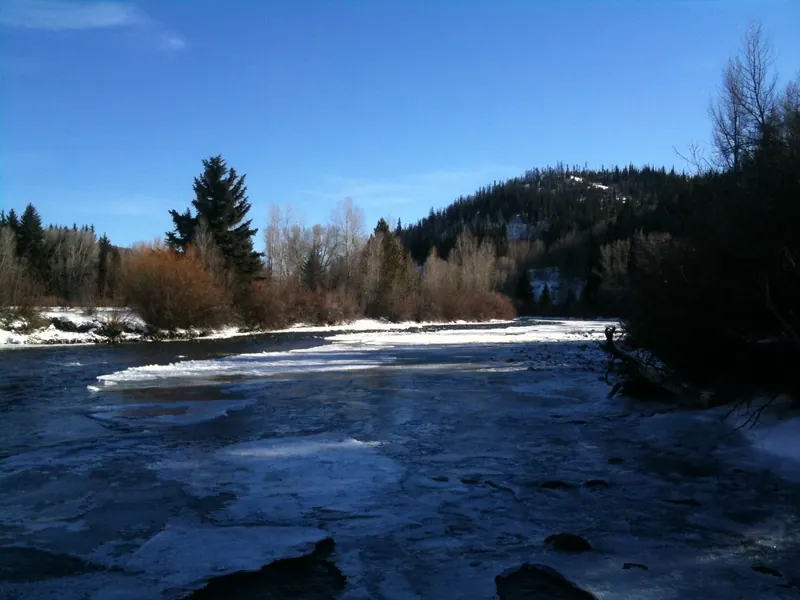
Fly Fishing the Blue River in Silverthorne
Fly fishing the Blue River tailwater below Dillon Dam in Silverthorne: mysis shrimp, big trout, flows, access through town and winter tips.
5 min readPhoto: devriesm, CC BY-SA 2.0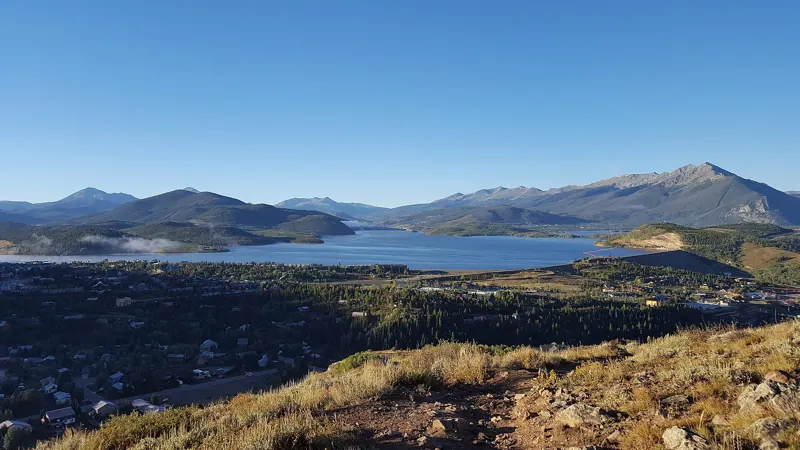
Fishing Dillon Reservoir
Fishing Dillon Reservoir (Lake Dillon) in Summit County: rainbows, browns, kokanee and Colorado's record Arctic char, the special size rules, where to fish from shore, ice fishing and parking at the marinas.
9 min readPhoto: Mcphail492, CC BY-SA 4.0
Winter Fly Fishing Near Denver
A practical guide to winter fly fishing near Denver: which tailwaters stay open, the best time of day, midge rigs, safety and staying warm.
3 min read
The Best Tailwaters Near Denver
The best tailwater fly fishing near Denver, from Waterton Canyon to the Fryingpan, with drive times, what each is best for and whether dogs are allowed.
2 min read